Executive Summary / Quick Takeaway
Discover the fascinating Ajanta and Ellora Caves in Maharashtra, from ancient Buddhist paintings and sculptures to the magnificent Kailasa Temple, with practical travel tips and nearby attractions.
India is home to some of the world's most remarkable historical monuments, but few places offer an experience quite like the Ajanta and Ellora Caves in Maharashtra.
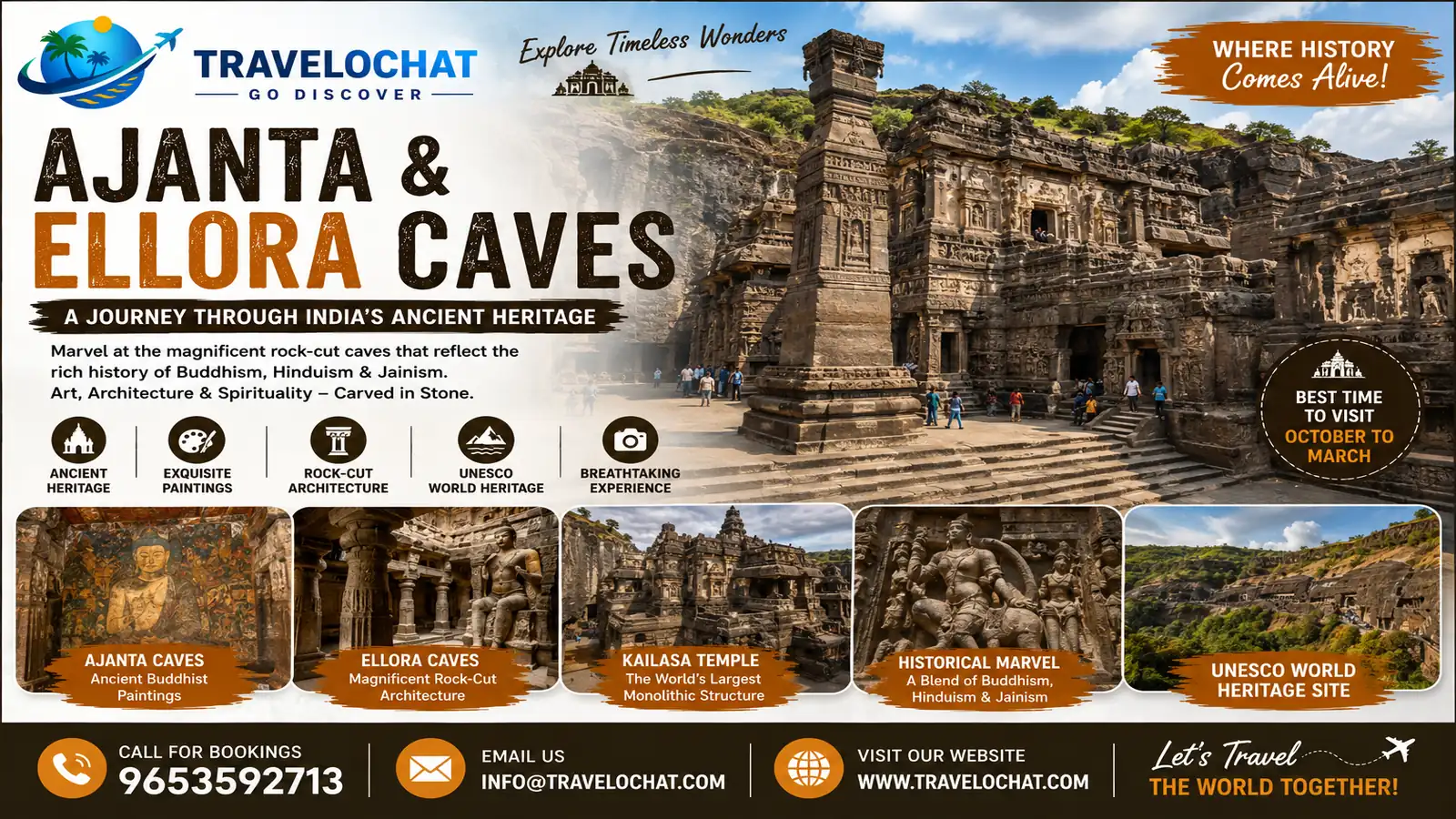
Carved directly into massive rock formations, these ancient caves showcase extraordinary art, architecture, religion and craftsmanship. From beautiful Buddhist paintings at Ajanta to the spectacular Kailasa Temple at Ellora, every corner tells a story of India's rich cultural past.
Located near Aurangabad, now officially known as Chhatrapati Sambhajinagar, Ajanta and Ellora are ideal destinations for history lovers, photographers, architecture enthusiasts, families and travellers looking for a different kind of holiday.
If you are planning a Maharashtra heritage trip, these caves should definitely be on your itinerary.
Why Ajanta and Ellora Caves Are Special
Ajanta and Ellora are not simply collections of old caves. They represent centuries of Indian artistic and religious development.
The sites contain monuments associated with:
- Buddhism
- Hinduism
- Jainism
- Ancient Indian architecture
- Rock-cut sculpture
- Religious art
- Traditional craftsmanship
The most fascinating part is that these monuments were created by carving directly into the rock.
Instead of constructing a temple by placing stones one above another, ancient craftsmen transformed solid rock into detailed temples, monasteries, sculptures and halls.
Ajanta Caves: A World of Ancient Paintings
The Ajanta Caves are particularly famous for their ancient Buddhist paintings and sculptures.
The caves are located in a horseshoe-shaped rock gorge surrounded by natural scenery.
Many caves were used as Buddhist monasteries and prayer spaces.
The paintings provide glimpses into ancient Indian life, including royal figures, religious stories, clothing, jewellery and everyday scenes.
For art lovers, Ajanta can feel like entering an enormous ancient gallery.
The Famous Paintings of Ajanta
One of the biggest attractions of Ajanta is its collection of murals.
The paintings are associated with Buddhist traditions and include stories connected with the Jataka tales.
The artwork demonstrates impressive attention to:
- Facial expressions
- Clothing
- Jewellery
- Human figures
- Animals
- Architectural details
- Colours
- Storytelling
Even after centuries, many paintings remain visually fascinating.
Photography restrictions can apply inside heritage monuments, so visitors should follow the rules displayed at the site.
Ajanta Cave Architecture
Ajanta includes different types of Buddhist structures.
Some caves functioned as monasteries, while others were designed as prayer halls.
The interiors contain pillars, sculptures, chambers and religious artwork.
Walking through the caves allows visitors to understand how Buddhist monks lived, studied and worshipped in ancient India.
The surrounding valley also adds to the experience.
Ellora Caves: Where Three Traditions Meet
The Ellora Caves are unique because the complex includes monuments associated with Buddhism, Hinduism and Jainism.
This makes Ellora an extraordinary representation of India's diverse religious and artistic heritage.
The caves were created over different periods, and their architecture reflects the evolution of rock-cut craftsmanship.
But among all the monuments at Ellora, one structure stands out above everything else.
Kailasa Temple: The Marvel of Ellora
The Kailasa Temple is one of the most spectacular achievements of Indian rock-cut architecture.
What makes it extraordinary is the method used to create it.
The temple was carved out of a single massive rock.
Instead of assembling the temple piece by piece, craftsmen removed enormous amounts of stone to reveal the architecture.
The result is a monumental temple complex featuring:
- Sculptures
- Pillars
- Courtyards
- Elephant figures
- Detailed walls
- Religious carvings
- Architectural elements
Standing in front of Kailasa Temple gives visitors a sense of the incredible scale of ancient Indian craftsmanship.
Ellora's Buddhist Caves
The Buddhist caves at Ellora include monasteries, prayer halls and sculptures.
They provide another perspective on the development of Buddhist architecture after the earlier artistic traditions represented at Ajanta.
Some caves contain large Buddha figures and impressive interior spaces.
The atmosphere can be particularly peaceful when visitors take time to explore the architecture rather than simply moving from cave to cave.
Jain Caves at Ellora
The Jain caves form another important part of the Ellora complex.
They feature detailed carvings and sculptures connected with Jain traditions.
Compared with some of the larger Hindu monuments, these caves may feel more intimate, but their decorative work is equally interesting.
They demonstrate the religious diversity that developed in the region.
Ajanta vs Ellora: What Is the Difference?
Although Ajanta and Ellora are often mentioned together, they offer different experiences.
| Ajanta Caves | Ellora Caves |
|---|---|
| Famous for Buddhist paintings | Famous for monumental rock-cut architecture |
| Primarily Buddhist heritage | Buddhist, Hindu and Jain monuments |
| Ancient murals are a major attraction | Kailasa Temple is the major highlight |
| Located in a scenic gorge | Large cave complex along a rock face |
| Strong focus on paintings and Buddhist art | Strong focus on architecture and sculpture |
If you have enough time, visiting both is highly recommended.
Best Time to Visit Ajanta and Ellora Caves
The ideal time for exploring the caves is generally during the cooler months.
October to February
This period is usually more comfortable for walking around the archaeological sites.
The weather can make outdoor sightseeing easier, especially when visiting both complexes.
March to May
Temperatures can become quite high during the day.
If travelling during this period, start sightseeing early and carry sufficient drinking water.
Monsoon Season
The surrounding landscape can become greener during the monsoon, creating beautiful scenery.
However, rainfall can affect travel plans, so check local weather and road conditions before travelling.
How Many Days Are Enough?
A 2 to 3 day heritage trip can provide enough time to explore Ajanta and Ellora along with nearby attractions.
Day 1
Arrive in Chhatrapati Sambhajinagar and explore local attractions.
Day 2
Visit Ajanta Caves and return to the city.
Day 3
Explore Ellora Caves, including Kailasa Temple, and continue your journey or return home.
If you have additional time, you can explore more historical attractions around the city.
Other Places to Visit Near Ajanta and Ellora
A trip to the caves can be combined with other attractions in the region.
Bibi Ka Maqbara
Often referred to as the “Taj of the Deccan,” Bibi Ka Maqbara is an important historical monument in Chhatrapati Sambhajinagar.
Its Mughal-inspired architecture makes it a popular addition to a heritage itinerary.
Daulatabad Fort
Daulatabad Fort is another impressive historical attraction near Ellora.
The fort is known for its strategic location, strong defensive architecture and fascinating history.
Panchakki
Panchakki is another historic attraction associated with the region.
It provides an opportunity to explore the engineering and water-management traditions of the past.
Ajanta and Ellora for History Lovers
If you enjoy history, these caves can provide a much deeper experience than a typical sightseeing trip.
Instead of simply photographing the monuments, pay attention to:
- Carving techniques
- Sculptural details
- Pillar designs
- Religious symbolism
- Ancient paintings
- Architectural planning
- Stories represented through art
A knowledgeable local guide can also help explain details that may otherwise be easy to miss.
Ajanta and Ellora for Families
The caves can be a valuable educational experience for families.
Children can learn about:
- Ancient Indian history
- Buddhism
- Hinduism
- Jainism
- Traditional architecture
- Sculpture
- Painting
- Archaeology
Parents should keep in mind that exploring the sites involves walking, stairs and outdoor sections.
Comfortable footwear is strongly recommended.
Ajanta and Ellora for Photography
These heritage sites offer excellent opportunities for architectural and cultural photography.
You can photograph:
- Rock-cut temples
- Sculptures
- Pillars
- Courtyards
- Mountain landscapes
- Cave entrances
- Ancient architectural details
However, photography rules differ across protected monuments and individual caves. Always follow the instructions provided at the site.
What to Carry for Your Trip
Keep your packing simple and practical.
Recommended items
- Comfortable walking shoes
- Sunglasses
- Sunscreen
- Drinking water
- Light clothing
- Hat or cap
- Camera
- Power bank
- Personal medicines
- Government ID
If travelling during the cooler months, carry a light jacket for mornings and evenings.
Travel Tips for Ajanta and Ellora
Start Early
Starting your sightseeing early can make the experience more comfortable, especially during warmer months.
Wear Comfortable Shoes
You will be walking and exploring uneven surfaces, stairs and large archaeological areas.
Keep Water With You
The weather can become warm, particularly during the afternoon.
Respect the Heritage
Do not touch, scratch or damage sculptures and paintings.
Follow Photography Rules
Some areas may have restrictions on photography or flash.
Consider a Guide
A knowledgeable guide can explain the stories, symbolism and architectural techniques behind the monuments.
A Heritage Journey Through Maharashtra
Ajanta and Ellora offer something different from a conventional holiday.
There are no beaches to relax on and no luxury attractions designed purely for entertainment.
Instead, the experience comes from standing inside a centuries-old cave and looking at artwork created by people who lived generations ago.
It comes from seeing a huge temple carved from a single rock.
It comes from walking through spaces where religion, art and architecture have survived for centuries.
That is what makes Ajanta and Ellora unforgettable.
Why Plan Your Ajanta and Ellora Trip with Travelochat?
A heritage holiday can be combined with sightseeing around Chhatrapati Sambhajinagar and nearby destinations.
Travelochat can help plan a customised Maharashtra heritage tour according to your travel dates, number of travellers and budget.
Your itinerary can include:
- Ajanta Caves
- Ellora Caves
- Kailasa Temple
- Bibi Ka Maqbara
- Daulatabad Fort
- Panchakki
- Chhatrapati Sambhajinagar
- Local sightseeing
Whether you are planning a family holiday, educational trip, heritage tour or weekend getaway, Travelochat can help organise your travel arrangements.
Contact Travelochat
Phone: 9653592713
Email: info@travelochat.com
Website: Travelochat.com
Travelochat – Go Discover.
Final Thoughts
Ajanta and Ellora are among the places where India's history feels alive.
The paintings of Ajanta, the sculptures of Ellora and the extraordinary Kailasa Temple demonstrate the creativity and skill of ancient Indian craftsmen.
A visit here is not simply sightseeing. It is a journey through art, architecture, religion and history.
So, if your next Maharashtra trip is about discovering something meaningful rather than simply visiting another tourist attraction, put Ajanta and Ellora Caves on your list.
Plan your heritage journey with Travelochat and Go Discover.
Related Tags:
Written by TraveloChat Editorial
Senior Destination Specialist at TraveloChat Desk. Expert in itinerary planning, B2B hotel contracts, and international visa concierge.Inspired to Visit Ajanta & Ellora Caves, Domestic Destinations, Honeymoon Guides, International Escapes, Jakhoo Te?
Get a 100% customized tour package with direct B2B transparent pricing and 24/7 on-tour support.