
Executive Summary / Quick Takeaway
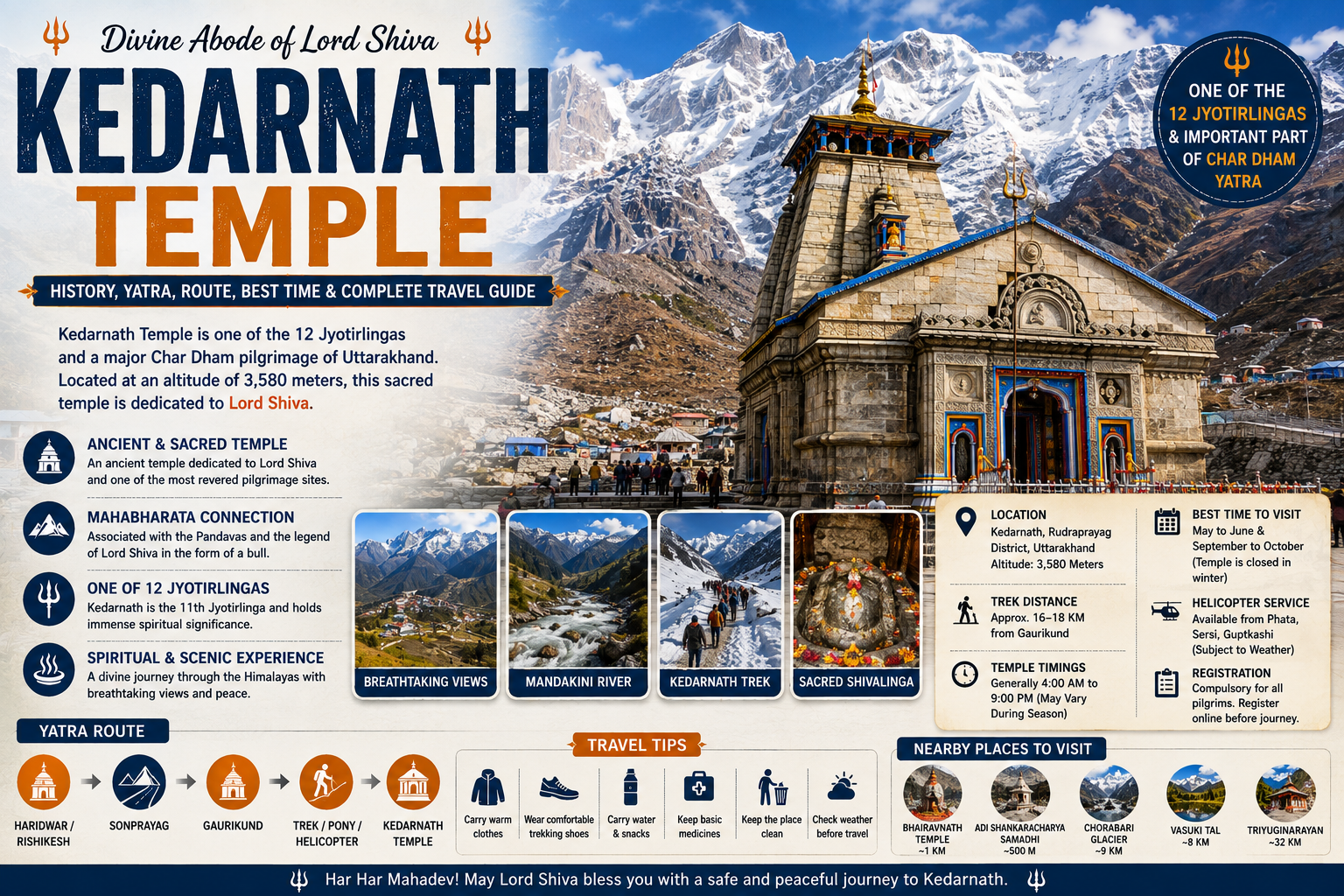
Discover Kedarnath Temple, one of India's most revered Shiva temples and a major Char Dham pilgrimage destination. Explore its history, mythology, yatra route, trekking options, best time to visit, nearby attractions and important travel tips.
Kedarnath Temple: History, Yatra, Route, Best Time & Complete Travel Guide
Nestled high in the majestic Garhwal Himalayas of Uttarakhand, Kedarnath Temple is one of the most sacred pilgrimage destinations in India. Surrounded by dramatic snow-covered peaks and the beautiful Mandakini Valley, Kedarnath offers a unique combination of spirituality, mythology and Himalayan beauty.
Dedicated to Lord Shiva, Kedarnath is one of the 12 Jyotirlingas of India and an important destination in the Char Dham pilgrimage circuit. The temple is situated at an altitude of approximately 3,580 metres.
For devotees as well as mountain lovers, a journey to Kedarnath is much more than a normal trip. It is an experience filled with faith, adventure and breathtaking natural scenery.
What is Kedarnath Temple?
Kedarnath Temple is an ancient Hindu temple dedicated to Lord Shiva and is located in Kedarnath town in Uttarakhand.
The temple is one of the most important Shiva pilgrimage sites in India and is officially recognised as the eleventh of the twelve Jyotirlingas by the Shri Badrinath Kedarnath Temple Committee.
The temple stands against the backdrop of the magnificent Himalayan peaks, creating one of the most spectacular spiritual landscapes in the country.
Where is Kedarnath Temple Located?
Kedarnath Temple is located in the Rudraprayag district of Uttarakhand, in the Garhwal Himalayas.
The temple town lies at an altitude of around 3,580 metres, near the Chorabari Glacier and the source region of the Mandakini River.
Because of its high-altitude location and heavy winter snowfall, access to Kedarnath is seasonal.
History of Kedarnath Temple
Kedarnath has a long history of religious significance.
The temple is traditionally associated with Adi Guru Shankaracharya, who is believed to have established or revived the important pilgrimage tradition associated with Kedarnath. The official temple committee also identifies Kedarnath among the temples associated with Shankaracharya.
The exact early history of the temple is intertwined with religious tradition, mythology and the development of Himalayan pilgrimage routes.
Today, Kedarnath remains one of India's most important pilgrimage destinations.
The Mahabharata Story Behind Kedarnath
One of the most famous legends connected with Kedarnath comes from the Mahabharata.
According to the traditional story, after the Kurukshetra war, the Pandavas wanted to seek forgiveness from Lord Shiva for the destruction caused during the battle.
Lord Shiva did not wish to meet them and is said to have taken the form of a bull.
The Pandavas recognised the bull and attempted to catch him. Shiva then disappeared into the ground, leaving his hump visible at Kedarnath.
According to the tradition of Panch Kedar, other parts of the divine form appeared at Tungnath, Rudranath, Madhyamaheshwar and Kalpeshwar.
This legend is one of the reasons Kedarnath holds such an important place in Hindu pilgrimage.
Why is Kedarnath Temple Famous?
Kedarnath is famous for several reasons:
- 🕉️ One of the 12 Jyotirlingas
- 🙏 Important Lord Shiva pilgrimage
- 🏔️ Located in the high Himalayas
- 🚶 Famous Himalayan pilgrimage trek
- 📖 Strong connection with Mahabharata traditions
- 🛕 Part of the Char Dham pilgrimage circuit
- ❄️ Surrounded by spectacular snow-covered mountains
- 🧘 Associated with Adi Shankaracharya
The combination of spirituality and natural beauty makes Kedarnath unique.
Architecture of Kedarnath Temple
One of the most fascinating aspects of Kedarnath Temple is its traditional stone architecture.
Uttarakhand Tourism describes the temple as being constructed from large, evenly shaped grey stone slabs.
The massive stone structure has withstood the harsh Himalayan environment for centuries and remains an impressive example of traditional mountain temple architecture.
Inside the temple, a conical rock formation is worshipped as Lord Shiva in his Sadashiva form.
Kedarnath Temple and Char Dham
Kedarnath is an important destination in the Char Dham pilgrimage of Uttarakhand.
The four major pilgrimage sites are:
- Kedarnath
- Badrinath
- Gangotri
- Yamunotri
Kedarnath represents one of the most important Shiva pilgrimage destinations among these Himalayan shrines.
Kedarnath Yatra Route
The traditional journey to Kedarnath involves travelling through the Himalayan region and then continuing towards the temple.
A common route is:
Haridwar/Rishikesh → Devprayag → Srinagar → Rudraprayag → Guptkashi → Sonprayag → Gaurikund → Kedarnath
The exact road conditions and route arrangements can change depending on weather and administration.
Pilgrims should check the latest official travel information before beginning their journey.
Gaurikund to Kedarnath Trek
For pilgrims travelling by the traditional route, the trek begins from Gaurikund.
The journey involves a challenging uphill Himalayan trail.
The trekking distance and route conditions can change because of weather, infrastructure and administrative arrangements, so travellers should check the latest official information rather than relying on old distance figures.
The trek includes:
- Steep sections
- Mountain paths
- Bridges
- Waterfalls
- Himalayan scenery
- Pilgrim rest points
For many devotees, completing this journey on foot is an important part of the Kedarnath experience.
Other Ways to Reach Kedarnath
Travellers who are unable or unwilling to complete the entire trek on foot may have other options depending on current government and local arrangements.
These can include:
Helicopter Services
Helicopter shuttle services operate subject to weather, government regulations and availability. The official BKTC website directs pilgrims to the designated helicopter booking system for Kedarnath.
Pony & Mule Services
Pony and mule services may be available along designated pilgrimage routes, subject to local regulations and conditions.
Palki Services
Palki services may also be available for pilgrims who need assistance during the journey.
Availability, pricing and operating rules can change, so confirm locally before travelling.
Best Time to Visit Kedarnath
Kedarnath is a seasonal pilgrimage destination because of its high altitude and heavy winter snowfall.
Uttarakhand Tourism recommends May to October as the best period for visiting, while the town generally remains closed during the winter months because of heavy snowfall.
May to June
This is a popular period for pilgrimage.
The weather is comparatively comfortable, although mountain conditions can change quickly.
July to September
The monsoon season can bring heavy rainfall to Uttarakhand.
Travellers should check weather forecasts, road conditions and official yatra advisories before travelling.
September to October
This can be an excellent period for travellers looking for clearer mountain views and cooler weather, subject to the official pilgrimage schedule.
Kedarnath Temple Opening & Closing
Kedarnath is not open throughout the year.
The temple's annual opening and closing dates are determined according to traditional religious practices and are announced for each pilgrimage season.
The official Shri Badrinath Kedarnath Temple Committee publishes current yatra information and services on its website.
Before travelling, pilgrims should check the latest official opening dates, registration requirements and weather advisories.
Kedarnath Yatra Registration
Pilgrims travelling to Kedarnath need to complete the applicable yatra registration/formalities before beginning the pilgrimage.
The official BKTC website directs pilgrims to the Uttarakhand government registration portal and advises visitors to keep checking for changes in requirements.
Important: Registration rules, routes and travel arrangements can change, so always check official government information before your journey.
Places to Visit Near Kedarnath
Adi Shankaracharya Samadhi
The Adi Shankaracharya Samadhi is located behind the Kedarnath Temple and is one of the major attractions in the temple town. Uttarakhand Tourism identifies it as an important spiritual site associated with Adi Shankaracharya.
Bhairavnath Temple
Bhairavnath Temple is another important religious attraction near Kedarnath.
It offers beautiful views of the surrounding Himalayan landscape.
Chorabari Glacier
The region around the Chorabari Glacier is associated with the source area of the Mandakini River and provides a spectacular Himalayan setting.
Access conditions can vary, so check current local guidance before planning any trek.
Mandakini River
The Mandakini River is closely associated with the Kedarnath region and adds to the natural beauty of the valley.
Kedarnath for Families
A Kedarnath pilgrimage can be a memorable family experience, but the high altitude and demanding terrain require careful planning.
Families travelling with:
- Children
- Senior citizens
- People with limited mobility
should consider the physical demands of the journey before travelling.
Weather conditions can change quickly in the Himalayas.
Kedarnath for Senior Citizens
Senior citizens should plan the journey carefully because Kedarnath is situated at a very high altitude.
It is advisable to:
- Consult a doctor before undertaking a strenuous high-altitude pilgrimage.
- Allow enough time for rest.
- Stay hydrated.
- Avoid rushing.
- Carry necessary medicines.
- Check the latest weather and yatra advisories.
- Consider available assisted travel options.
What to Carry for Kedarnath Yatra
Because Kedarnath is located at high altitude, packing correctly is important.
Essential Items
- Warm jacket
- Thermal wear
- Comfortable trekking shoes
- Rain protection
- Woollen socks
- Gloves
- Cap
- Sunglasses
- Sunscreen
- Water bottle
- Personal medicines
- Basic first-aid items
- Government ID
- Registration documents
Weather can change rapidly, so carrying suitable clothing is important even during warmer months.
Important Kedarnath Travel Tips
Before starting your journey, remember:
- Complete the required registration.
- Check official weather updates.
- Check road and trek conditions.
- Start the trek early when appropriate.
- Carry sufficient water.
- Wear proper footwear.
- Avoid littering.
- Follow instructions from local authorities.
- Respect temple rules.
- Do not depend on outdated travel information.
- Keep emergency contacts available.
- Give yourself enough time for rest and acclimatisation.
Kedarnath Temple Photography
The Himalayan landscape around Kedarnath offers incredible photography opportunities.
You can capture:
- Kedarnath Temple
- Himalayan peaks
- Mandakini Valley
- Mountain trails
- Snow-covered landscapes
- Traditional pilgrimage scenes
However, visitors should respect temple rules and avoid photography wherever it is restricted.
Kedarnath Temple and Spiritual Experience
For many pilgrims, Kedarnath is not simply a tourist destination.
The combination of:
Faith + Himalayas + Lord Shiva + Ancient Traditions
creates a deeply spiritual atmosphere.
The difficult journey itself is often considered an important part of the pilgrimage.
Reaching the temple after travelling through the Himalayan landscape can be an emotional and memorable experience.
Why Kedarnath Should Be on Your Travel List
🕉️ Spiritual Significance
One of India's most revered Shiva temples.
🛕 Jyotirlinga
One of the twelve Jyotirlingas of Lord Shiva.
🏔️ Himalayan Beauty
Surrounded by some of the most spectacular mountain scenery in Uttarakhand.
🚶 Adventure
A challenging and memorable Himalayan pilgrimage journey.
📖 Mythology
Deeply connected with Mahabharata traditions and Panch Kedar.
🙏 Peace
A unique environment for prayer, reflection and spiritual connection.
TravelOChat Special: Plan Your Kedarnath Yatra
Kedarnath is a journey that combines devotion with the beauty of the Himalayas.
From the winding mountain roads to the pilgrimage route and finally the magnificent temple surrounded by towering peaks, every stage of the journey offers something memorable.
With TravelOChat, plan your Uttarakhand journey with a well-organised itinerary and include important destinations around Kedarnath according to your travel schedule.
Travel with faith. Explore the Himalayas. Experience Kedarnath with TravelOChat.
Final Words
Kedarnath Temple is one of India's most sacred and spectacular pilgrimage destinations.
Dedicated to Lord Shiva and recognised as one of the 12 Jyotirlingas, the temple stands at approximately 3,580 metres in the Garhwal Himalayas. Its ancient traditions, powerful mythology, remarkable stone architecture and extraordinary mountain surroundings make Kedarnath a truly unforgettable destination.
Whether you travel as a pilgrim, a nature lover or a mountain enthusiast, Kedarnath offers an experience that stays with you long after the journey ends.
Har Har Mahadev! 🕉️🏔️🙏
Written by TraveloChat Editorial
Senior Destination Specialist at TraveloChat Desk. Expert in itinerary planning, B2B hotel contracts, and international visa concierge.Inspired to Visit Domestic Destinations?
Get a 100% customized tour package with direct B2B transparent pricing and 24/7 on-tour support.